
Solar-Powered Water Pumps for Agriculture and Irrigation
Pump water for irrigation or borewell supply directly from solar power — reducing dependency on diesel fuel or unreliable grid electricity in farm and rural locations.
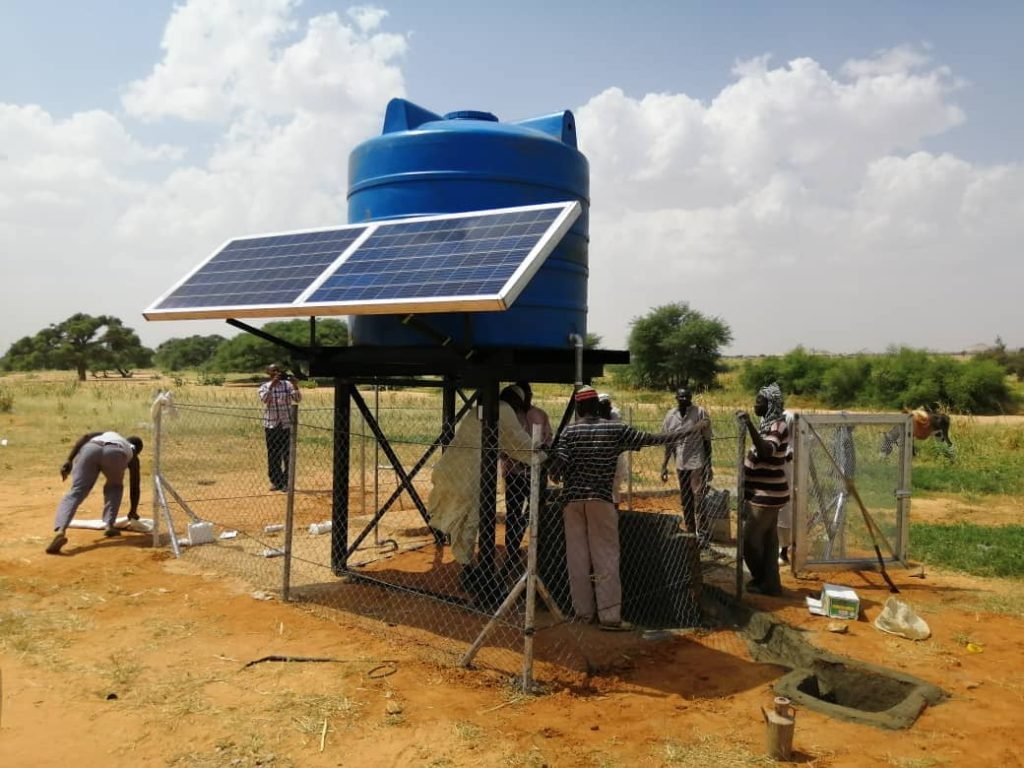
Pump Water Directly from the Sun
A solar water pumping system uses dedicated solar panels to power a submersible or surface pump directly, either through a solar-compatible AC pump with an inverter/controller or a DC pump driven straight from the panel array. This eliminates the recurring cost of diesel fuel for pump sets in areas without reliable grid power, and removes electricity billing entirely for grid-connected farms that switch their pump load to solar. Because irrigation typically happens during daylight hours anyway, solar water pumps align naturally with generation availability, and systems are sized around your borewell depth, flow-rate requirement, and the area under irrigation.
Who is this solution suitable for?
Key Benefits
No Fuel Cost
Eliminates recurring diesel expense for irrigation pumping.
Runs on Daylight
Naturally aligned with typical daytime irrigation schedules.
Works Off-Grid
Suitable for farms and fields without a nearby electricity connection.
Lower Environmental Impact
Reduces reliance on diesel generators for pumping.
How the System Works
- 1 Solar panels installed near the borewell or well generate DC electricity as sunlight increases through the morning.
- 2 A pump controller (for AC pumps) or direct DC connection powers the water pump according to available sunlight.
- 3 The pump draws water from the borewell or source and delivers it to your irrigation channel, tank, or field.
- 4 Pumping output naturally follows solar intensity — stronger through midday, tapering in early morning and evening.
Get a Free Site Assessment
Tell us about your property and our team will call you back.
Available System Capacity
Indicative starting points — final sizing depends on your actual consumption and rooftop or land area.
| System Capacity | Typically Suitable For | Approx. Area Required | Indicative Monthly Generation |
|---|---|---|---|
| 1 HP – 2 HP | Small landholdings, shallow borewells | Suitable for limited irrigation area | Panel array sized to pump rating |
| 3 HP – 5 HP | Medium landholdings, standard borewells | Suitable for moderate irrigation area | Panel array sized to pump rating |
| 7.5 HP – 10 HP | Larger farms, deeper borewells | Suitable for larger irrigation area | Panel array sized to pump rating |
| Above 10 HP | Large agricultural operations | As per water requirement study | As per system design |
What Goes Into the System
Every installation is built from certified, compatible components sized for your load.
Solar Panel Array
Sized to reliably power your selected pump rating through the day.
Pump Controller
Manages power delivery to AC pump motors based on available sunlight.
Submersible or Surface Pump
Selected based on borewell depth and required flow rate.
Mounting Structure
Ground-mount frame positioned near the pump location.
DC/AC Cabling
Weatherproof cabling suited to outdoor farm installation.
Protection Equipment
Dry-run protection and electrical safety components.
Suggested Installation Process
A clear, transparent path from enquiry to handover.
Enquiry & Requirement Discussion
Understand borewell depth, flow needs and irrigation area.
Site Survey
Assess panel placement, shading and distance from the pump location.
Pump & Panel Sizing
Match panel capacity to the appropriate pump rating.
Quotation & Approval
Transparent proposal covering pump, panels and installation.
Installation
Panel mounting, pump connection and cabling by trained technicians.
Testing & Handover
Flow-rate testing and system orientation for farm use.
What Affects Your Project Cost
- Pump horsepower (HP) rating required for your borewell depth and flow needs
- Solar panel capacity needed to reliably power the selected pump
- Borewell depth and existing water table conditions
- Distance between the panel array and the pump/borewell location
- Applicable scheme-linked subsidy, where the installation qualifies
Estimated Savings Potential
Farms switching from diesel-powered pump sets typically see the most direct savings, since fuel costs are eliminated entirely. Grid-connected farms switching pump load to solar avoid the electricity cost associated with running that pump, though actual savings depend on prior fuel or electricity spend and irrigation hours required.
Use our interactive calculator on the homepage for an indicative estimate based on your own electricity bill and rooftop area.
Calculate Your SavingsSubsidy Applicability
Solar agricultural water pumps are commonly supported under government schemes such as PM-KUSUM (Component B/C), which are separate from the residential rooftop subsidy programme and are administered through state nodal agencies. Eligibility, subsidy percentage and the application process vary by state and change periodically — our team can guide you to the current scheme status for Uttar Pradesh.
View Full Subsidy GuideFinance Options
Some finance institutions and state nodal agencies offer specific loan products for solar agricultural pumps, often linked to scheme participation. Availability and terms depend on the specific scheme and lender.
Explore EMI & FinanceMaintenance Requirements
Solar water pump systems need periodic panel cleaning (important in dusty farm environments), a check of pump seals and connections, and verification that the controller and protection equipment are functioning correctly, especially before each irrigation season.
Solar Maintenance PlansIllustrative Project Examples
Representative examples of the scale and outcomes this solution supports.
5 HP Solar Pump Installation
5 HP / Off-Grid
A farmer switched from a diesel pump set to solar for borewell irrigation.
3 HP Solar Pump System
3 HP / Off-Grid
A medium landholding adopted solar pumping to reduce recurring fuel costs.
7.5 HP Solar Pump Installation
7.5 HP / Off-Grid
A larger farm installed a higher-capacity solar pump to cover an extended irrigation area.
Why Choose Sarth Solar for Solar Water Pump
Correct Pump-Panel Matching
We size the panel array specifically to your chosen pump rating.
Scheme Guidance
Support understanding PM-KUSUM and other applicable pump subsidy schemes.
Farm Site Experience
Installation planning accounts for field access and borewell conditions.
Reliable Protection Equipment
Dry-run and electrical protection to safeguard your pump investment.
Seasonal Maintenance Support
Guidance on pre-season checks before each irrigation cycle.
Transparent Pump-Specific Pricing
Clear costing tied to your borewell and flow-rate requirements.
Related Solar Solutions
Solar Water Pump — Frequently Asked Questions
This depends on your borewell depth, required flow rate, and irrigation area — our team assesses these factors during a site visit to recommend the right HP rating.
Yes, most solar water pumps are designed to run directly from solar panels during daylight hours without a battery, since irrigation typically happens during the day anyway.
Yes, schemes like PM-KUSUM offer subsidy support for agricultural solar pumps in many states, subject to current eligibility rules and state nodal agency processes — ask our team for the latest status in Uttar Pradesh.
Savings depend on your prior diesel consumption and irrigation hours; farms with significant diesel usage typically see the most direct cost benefit after switching.
Output reduces on cloudy days since it depends directly on sunlight intensity, though most systems still provide partial pumping capacity.
This depends on your pump configuration and daily water requirement — best discussed during the requirement assessment.
Periodic panel cleaning, pump seal and connection checks, and pre-season verification of the controller and protection equipment.
With regular maintenance, solar pump systems are designed for many years of operation; exact lifespan depends on pump quality, water conditions, and usage intensity.
In many cases the existing pump can be evaluated for solar compatibility, or replaced with a solar-compatible pump — assessed during your site visit.
Enquire About Solar Water Pump
Fill in your details — our team typically responds within one business day.