
Off Grid Solar System Gorakhpur
Sun Solar Solution offers reliable Off Grid Solar Systems in Gorakhpur for residential and commercial. Get the right solar solution for your energy needs with expert installation and trusted support.
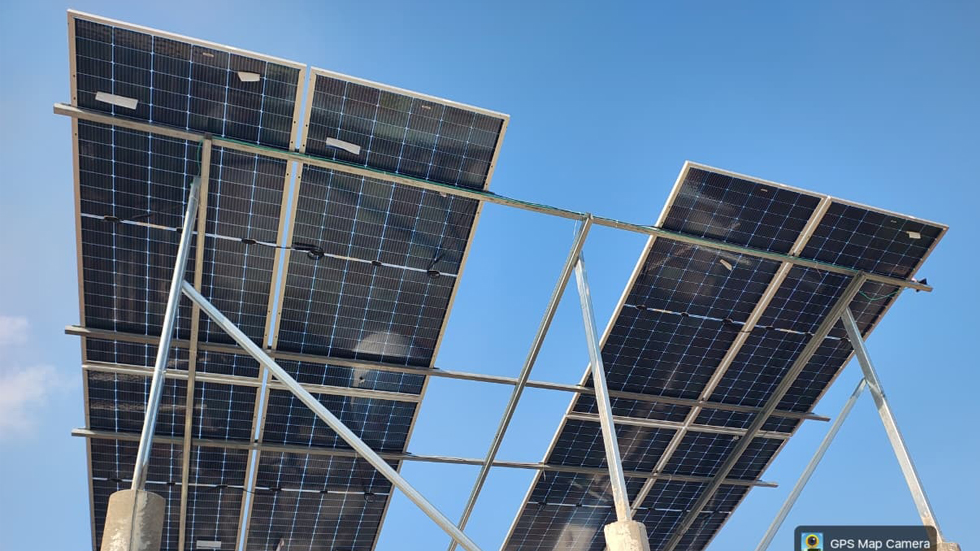
Solar Power Independent of the Grid
An off-grid solar system is not connected to the DISCOM network at all. Solar panels charge a battery bank through a charge controller, and the stored energy powers your loads directly through an off-grid inverter, day or night. This makes off-grid systems the right fit for locations with no reliable grid connection, remote farmhouses, outbuildings, or sites where extending a grid line would be impractical or costly. Because the battery bank must be sized to cover your full energy needs (not just a backup buffer), off-grid systems require more careful load analysis and typically cost more per kW than grid-tied alternatives.
Who is this solution suitable for?
Key Benefits
Complete Independence
No reliance on grid availability or DISCOM connection at all.
Works Anywhere
Suitable for locations far from grid infrastructure.
Reliable in Outage-Prone Areas
Power availability isn't affected by grid faults or load-shedding.
Flexible Battery Sizing
Backup duration engineered around your specific daily load.
How the System Works
- 1 Solar panels generate DC power, which a charge controller regulates to safely charge the battery bank.
- 2 The off-grid inverter draws power from the batteries (topped up by solar) to run your connected loads.
- 3 During the day, solar power runs your loads directly while simultaneously charging the batteries.
- 4 At night or during low sunlight, stored battery energy continues to power your essential and general loads.
Get a Free Site Assessment
Tell us about your property and our team will call you back.
Off Grid Solar — Frequently Asked Questions
An off-grid system has no grid connection at all and relies entirely on solar plus battery. A hybrid system stays connected to the grid as a backup while also using a battery — see our Hybrid Solar page for details.
We calculate your total daily energy requirement (kWh) based on the appliances and hours you need to run, then size the battery bank with an appropriate safety margin.
Lifecycle varies by chemistry — lithium-ion batteries generally last significantly longer than lead-acid or tubular batteries, but also cost more upfront. We discuss these trade-offs during consultation.
It's possible, but ACs are energy-intensive, so the panel and battery sizing needs to account for this specifically — flag this during your load discussion.
It's technically possible but rarely cost-effective in urban areas with reliable grid access, since hybrid or on-grid systems achieve similar reliability at lower cost. Off-grid is best suited to genuinely remote sites.
The system will not be able to power all loads once the battery is depleted; this is why accurate load study during design is important to avoid under-sizing.
Yes, primarily due to the battery bank, which needs periodic health checks in addition to standard panel and inverter maintenance.
Generally, off-grid systems fall outside the standard grid-connected subsidy scheme; certain agricultural applications may have separate scheme eligibility — ask our team about your specific case.
Timelines depend on site accessibility and system size; remote locations may require additional logistics planning discussed during the site survey.