
Rooftop Solar for Homes in Lucknow and Uttar Pradesh
Reduce your monthly electricity bill with a rooftop solar system designed for your family's daily usage, backed by subsidy assistance and flexible EMI options.
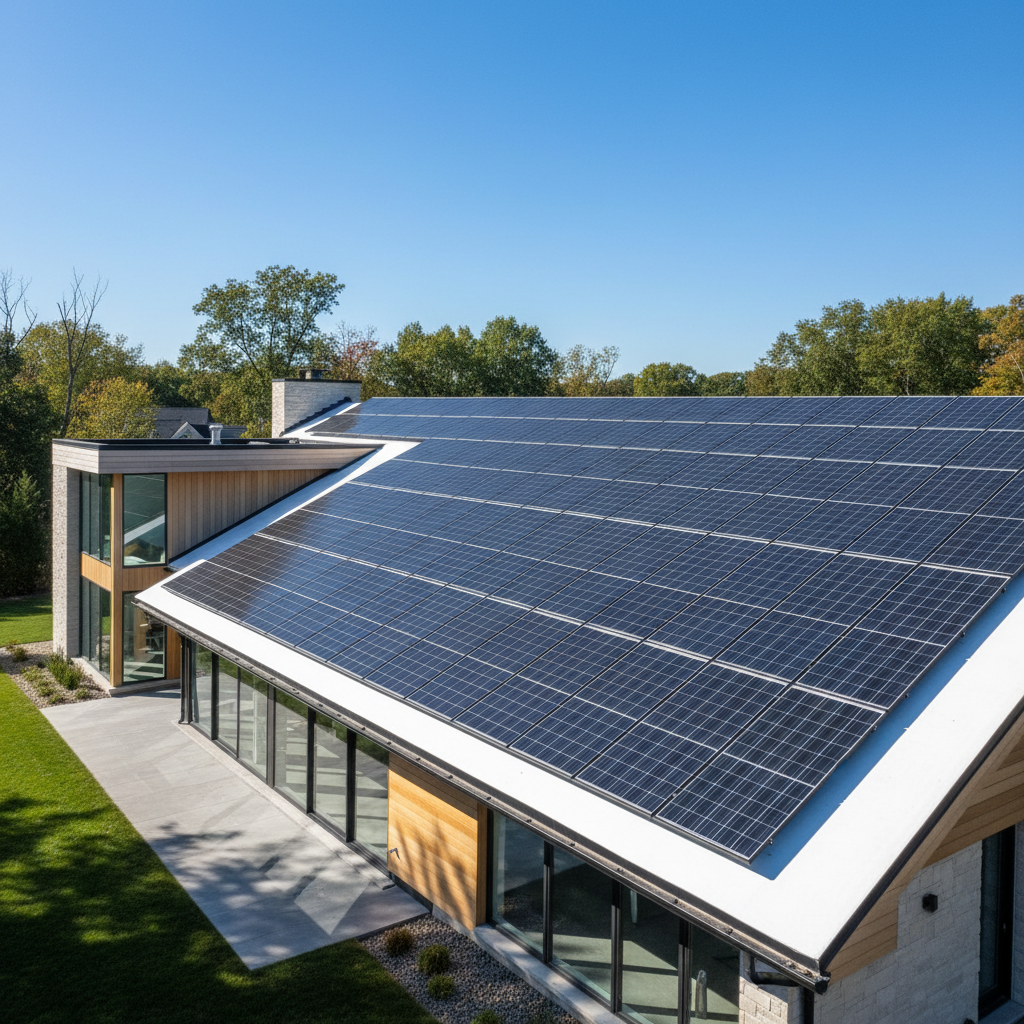
Rooftop Solar Built Around Your Household's Energy Use
A residential solar system converts sunlight falling on your rooftop into electricity that powers your home during daylight hours, reducing the number of grid units you draw and, in turn, your monthly electricity bill. Most homes in Lucknow and across Uttar Pradesh are well suited to an on-grid rooftop system that stays connected to the DISCOM network and uses net metering to adjust your bill for any surplus power exported back to the grid. We size every residential system around your family's actual consumption pattern, available roof area, and shading conditions, rather than offering one fixed package to every household.
Who is this solution suitable for?
Key Benefits
Lower Monthly Bills
Offset daytime household consumption and reduce dependence on grid electricity.
Subsidy Support
Assistance with documentation for the applicable residential rooftop subsidy scheme.
25-Year Panel Life
Mono PERC and TOPCon panels built for long operating life with standard performance warranties.
EMI Options
Spread your investment through bank loans or consumer finance partners.
How the System Works
- 1 Sunlight strikes the rooftop solar panels and is converted into direct current (DC) electricity.
- 2 A solar inverter converts this DC electricity into usable alternating current (AC) for your home appliances.
- 3 Your home first consumes solar power during daylight hours; any surplus is exported to the grid through a net meter.
- 4 In the evening or on low-sunlight days, you draw electricity back from the grid as usual — the net meter tracks both directions.
Get a Free Site Assessment
Tell us about your property and our team will call you back.
Available System Capacity
Indicative starting points — final sizing depends on your actual consumption and rooftop or land area.
| System Capacity | Typically Suitable For | Approx. Area Required | Indicative Monthly Generation |
|---|---|---|---|
| 1 kW – 2 kW | Small homes, bill up to ₹1,500/month | 90 – 180 sq. ft | 120 – 240 units/month |
| 3 kW | Average family home, bill ₹2,500 – 4,000 | 270 sq. ft | 360 units/month |
| 5 kW | Larger homes with AC and heavy appliance use | 450 sq. ft | 600 units/month |
| 7 kW – 10 kW | Large homes / independent bungalows | 630 – 900 sq. ft | 840 – 1,200 units/month |
What Goes Into the System
Every installation is built from certified, compatible components sized for your load.
Solar Panels
Mono PERC or TOPCon modules chosen for efficiency and available roof space.
On-Grid Inverter
Converts DC to AC and synchronises with the grid for net metering.
Mounting Structure
Corrosion-resistant rooftop structure engineered for local wind loads.
Cabling & Safety Kit
DC/AC cables, earthing, lightning protection and junction boxes.
Monitoring App
Track daily generation and system health from your phone.
Net Meter
Installed by the DISCOM to record import and export of electricity.
Suggested Installation Process
A clear, transparent path from enquiry to handover.
Enquiry & Consultation
Share your bill and roof details for an initial recommendation.
Free Site Survey
Our team assesses roof condition, shading and structural suitability.
System Design & Quote
A right-sized system design with transparent, itemised pricing.
Subsidy Documentation
Assistance preparing and submitting your subsidy application.
Installation
Certified technicians complete mounting, wiring and safety checks.
Net Metering & Handover
DISCOM inspection, net meter activation, and system handover.
What Affects Your Project Cost
- Selected system capacity (kW) and panel technology (Mono PERC vs. TOPCon)
- Rooftop condition, shading, and whether additional structural work is needed
- Choice of inverter brand and monitoring features
- Cabling run length and site accessibility
- Applicable subsidy amount, which reduces your net contribution
Estimated Savings Potential
Most residential systems are sized to offset a significant share of daytime electricity consumption. Actual savings depend on your household's usage pattern, tariff slab, sanctioned load, and how much surplus energy is exported under net metering. Homes with higher daytime consumption — such as those running ACs, coolers or work-from-home setups — typically see savings materialise faster.
Use our interactive calculator on the homepage for an indicative estimate based on your own electricity bill and rooftop area.
Calculate Your SavingsSubsidy Applicability
Residential rooftop solar systems are generally the category most likely to qualify for central subsidy support under the PM Surya Ghar Muft Bijli Yojana, subject to eligibility criteria, empanelled vendor requirements, and your DISCOM's approval process. Subsidy slabs vary by system size — see our dedicated subsidy page for indicative figures and the current application process.
View Full Subsidy GuideFinance Options
Residential customers can typically access solar-specific loans or consumer durable finance from partner banks and NBFCs, often with tenures of 3 to 7 years. Some lenders offer reduced or zero down payment for eligible profiles. Final interest rate, tenure and approval depend on your credit profile and the lender's policy.
Explore EMI & FinanceMaintenance Requirements
Residential systems need only periodic panel cleaning (especially before and after the monsoon and dust-heavy months) and an annual electrical health check. Our maintenance plans cover cleaning, inverter diagnostics, and performance monitoring so output stays close to design expectations.
Solar Maintenance PlansIllustrative Project Examples
Representative examples of the scale and outcomes this solution supports.
3 kW Rooftop Home System
3 kW / On-Grid
A family home with a west-facing roof installed a 3 kW system to offset daytime AC and appliance load, paired with net metering.
5 kW Independent House
5 kW / On-Grid
A larger household with rooftop water heating and multiple ACs opted for a 5 kW system sized around peak summer consumption.
2 kW Compact Home System
2 kW / On-Grid
A compact rooftop with partial shading used a 2 kW system optimised around the available unshaded area.
Why Choose Sarth Solar for Residential Solar
MNRE Guideline Support
Installation practices aligned with prevailing central rooftop solar guidelines.
Subsidy Documentation
We help prepare and track your subsidy application end to end.
Free Site Survey
No-cost rooftop assessment before you commit to anything.
Certified Installation
Trained technicians follow documented safety and quality checklists.
Fast After-Sales Service
Local Lucknow-based team for prompt maintenance response.
Transparent Pricing
Itemised quotations with no hidden costs.
Related Solar Solutions
Residential Solar — Frequently Asked Questions
Most homes with an open, unshaded rooftop area of at least 90–100 sq. ft and a monthly electricity bill above roughly ₹1,500 are good candidates. A free site survey confirms suitability for your specific roof.
Savings depend on your consumption pattern, sanctioned load, and system size. Our homepage calculator gives an indicative estimate; final savings depend on site conditions and DISCOM billing rules.
Most homes opt for an on-grid system without a battery, which is more cost-effective. A battery is only necessary if you specifically want backup power during outages — see our hybrid solar option for that.
A typical residential rooftop installation takes 1 to 3 days once the design and materials are ready, followed by DISCOM inspection and net meter activation, which can take a few additional weeks depending on local processes.
Eligibility depends on property type, system size, and current scheme rules. Our team verifies eligibility during the site survey and assists with the application — see our Solar Subsidy page for details.
Panels typically carry a product warranty and a separate long-term performance warranty; inverters carry a shorter product warranty. Exact terms depend on the manufacturer and are shared in your quotation.
Generation drops on cloudy days and stops at night. An on-grid system automatically draws the shortfall from the grid, so your home never loses power due to low sunlight.
In many cases yes, subject to available roof area, inverter capacity, and sanctioned load with your DISCOM. It's best to discuss future expansion plans during the initial design stage.
Yes, subject to lender approval. See our EMI & Finance page for an indicative calculator and the general application process.
Enquire About Residential Solar
Fill in your details — our team typically responds within one business day.